


PhD Research Summary
Windows of Fantasy: The Significance of Science-Fiction and Fantasy Film and Television Posters
Dr Rhianna M. Morse
PhD (Film & Television Studies, Brunel University London)
Fans don’t just watch stories — they live them on their walls.
This page presents a summary of my PhD research on fan culture, focusing on how posters shape identity, space, and everyday life in the home.
Findings summarised from Morse (2025a; 2025b).
%20Example%20of%20posters%20displayed%20in%20a%20workplace%20classroom___.png)
Source: Morse (2025b)
Example of posters displayed in a workplace classroom, showing how fans integrate film and television posters into everyday environments.
Contents
-
About the Research
-
Aim
-
Example Fan Poster Displays
-
Methodology
-
Key Findings
-
Frameworks (The Three Significances & The Big Three)
-
PhD Online Survey Summary
-
Research Contribution & Why it matters
-
References
-
Download Documents
About the Research
This PhD research explores how science fiction and fantasy posters are experienced by fans, focusing on their meaning in everyday life.
It looks at how posters are:
-
Displayed in the home (e.g. bedroom, study, shared spaces)
-
Placed and arranged (grouping, layout, positioning)
-
Connected to media (films, TV shows, and fictional worlds)
It also explores how posters relate to:
-
Identity and self-expression
-
Emotions and well-being
-
Personal meaning and memories
-
Levels of investment and attachment
Because science fiction and fantasy are imaginative genres, studying their posters offers a unique way to understand how people connect to fictional worlds in real life.
Aim
To understand how science fiction and fantasy posters create cultural meaning, and how individuals use them to express identity and engage with media in everyday spaces.

Example Fan Poster Displays
%20Bedroom%20poster%20display%20(Participant%20submission).jpg)
%20Bedroom%20poster%20display%20(Participant%20submission).jpg)
Source: Morse (2025b)
Bedroom poster display (Participant submission)
%20Hallway%20poster%20display%20(Participant%20submission).jpg)
Source: Morse (2025b)
Hallway poster display
(Participant submission)
%20Poster%20clustering%20example%20(Participant%20submission).png)
Source: Morse (2025b)
Example of a ‘franchise zone’ where posters are grouped by narrative world
(Participant submission)
Methodology
How the research was conducted:
-
📊 Survey – 273 respondents
-
🎤 Interviews – 28 participants
-
📷 Participant photographs
-
📚 Mixed-methods analysis
-
🖼 Adult poster owners from North America and Europe
-
Analysis of physical & digital posters
Key Findings

Official vs Fan Art
Official posters = accurate depictions
Fan art = creative reinterpretations

Content
Content is the most important factor for poster meaning

Reinforce & Evoke
Posters shape identity and trigger emotional responses

Identity & Connection
Posters support self-expression and media connection
.png)
Space Shapes Meaning
Where posters are placed changes how they are experienced
&


Physical & Digital
Format affects how posters are accessed and displayed
Frameworks
Two conceptual models guide the analysis:
The Three Significances
&
The Big Three
The Three Significances
Aesthetic, Functional, & Significance (both spatial and personal)
The Three Significances explain how posters gain meaning through their aesthetic qualities, practical function, and their spatial and personal significance within everyday spaces.
🎨
Aesthetic Significance
How posters are valued as art and visual culture.
🖼️ Focus:
-
Visual pleasure, style, and artistic appreciation
-
“The Big Three” → Content, Design, Colour
💡 Meaning:
-
Reflects personal taste and identity
-
Links to ideas of beauty, composition, and symbolism
-
Shapes emotional reactions and first impressions
📍 Examples:
-
A striking design that feels “cinematic”
-
Choice of colour palette reflecting mood or genre
🧩
Functional Significance
How posters serve a practical or everyday role.
🔧 Purpose:
-
Decoration, personalisation, or space-filling
-
Organising or dividing a room (physical posters)
-
Background imagery or wallpaper (digital posters)
🌐 Paratextual Role:
-
Extends the experience of the media text
-
Functions as advertisement, souvenir, or conversation starter
📍 Examples:
-
Poster over a desk to “set the tone”
-
Digital wallpaper connecting to a fandom or mood
💫
Personal / Spatial Significance
How posters hold emotional and symbolic meaning.
💖 Emotional Connection:
-
Memories, inspiration, comfort, identity
-
Links to fandom and belonging
🏡 Spatial Meaning:
-
Placement transforms rooms into expressions of self
-
Bedroom or office becomes an “outworld” or fan sanctuary
📍 Examples:
-
Hanging a favourite film poster above the bed
-
Framing a poster as a personal achievement or memory marker
✨ In short:
Posters are not just decorations — they are artworks, tools, and mirrors of identity.
Together, the Three Significances explain how and why posters matter socially, culturally, and personally.
Content, Design, & Colour
The Big Three identify the key visual elements of posters—content, design, and colour—that shape how they are interpreted and experienced by viewers. Price is not included because it can change over time, whereas these visual elements remain fixed once the poster is created.
The Big Three
👤
Content
What the poster shows and represents.
🪐 Focus:
-
Characters, story world, and themes
-
Logos, taglines, and textual clues
-
Narrative hints (e.g., conflict, setting, genre markers)
💡 Meaning:
-
Defines what the viewer connects with first
-
Carries symbolic and emotional cues from the media text
-
Highest-rated factor of importance among owners
📍 Examples:
-
Darth Vader silhouette = power & conflict
-
The Shire landscape = warmth & escapism
🖋️
Design
How the poster is composed and structured.
🎨 Focus:
-
Layout, typography, composition, balance
-
Use of negative space and focal points
-
Iconic design traditions (e.g., minimalist, montage, retro styles)
💡 Meaning:
-
Organises how the eye moves and reads the image
-
Communicates mood and energy before reading text
-
Reflects studio branding or fan-artist creativity
📍 Examples:
-
Symmetrical Marvel ensemble layout
-
Hand-drawn fan poster mimicking vintage cinema style
🌈
Colour
How colour shapes emotion, genre, and tone.
🎨 Focus:
-
Palette choices (dark vs bright, cool vs warm tones)
-
Colour contrast and saturation
-
Association with genre (e.g., blue sci-fi glow, gold fantasy warmth)
💡 Meaning:
-
Elicits instant emotional response
-
Helps viewers “feel” the world before seeing the film/show
-
Reinforces identity of the media text (brand consistency)
📍 Examples:
-
Deep blue + silver = futuristic, technological
-
Fiery reds/oranges = adventure, danger, or heroism
✨ In short:
The Big Three — Content, Design, and Colour — are the building blocks of meaning.
They work together to define how a poster communicates, attracts attention, and evokes emotion.
PhD Online Survey Summary
%20Figure%201.png)
%20Figure%202.png)
%20Figure%203.png)
%20Figure%204.png)
%20Table%201.png)
%20Figure%2015.png)
%20Figure%2016.png)
%20Figure%205.png)
%20Figure%206.png)
%20Figure%207.png)
%20Figure%208.png)
%20Figure%209.png)
%20Figure%2010.png)
%20Figure%2011.png)
%20Figure%2012.png)
%20Figure%2014.png)
%20Figure%2013.png)
PhD Online Survey Summary
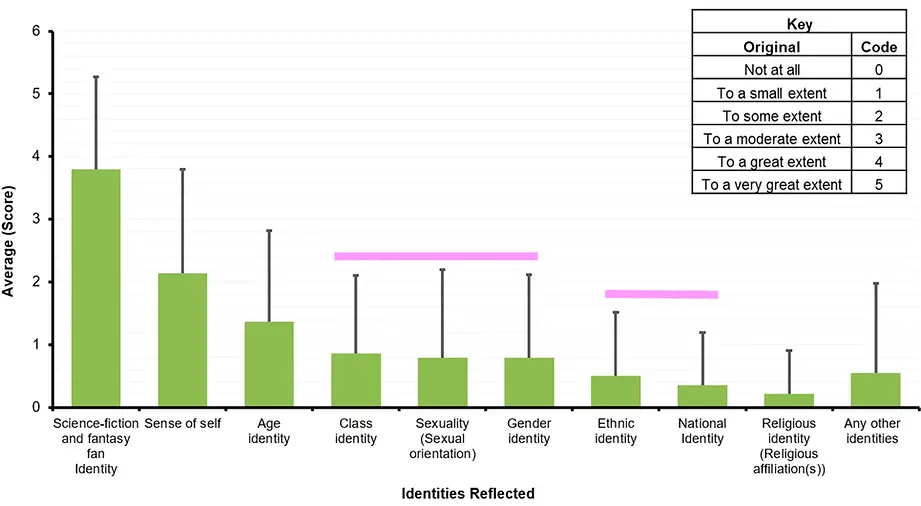
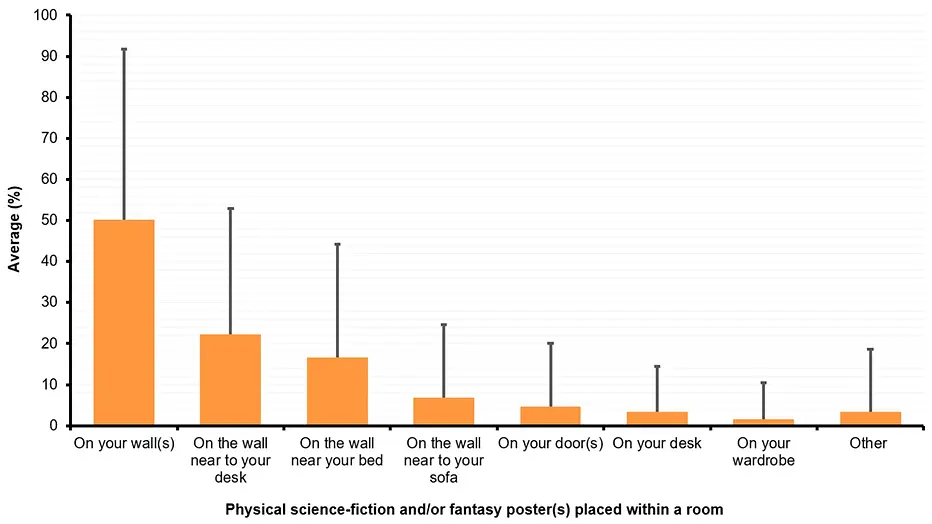
Over 273 respondents worldwide took part in an online study exploring how science-fiction and fantasy film and TV posters are owned, displayed, and valued. Findings show these posters are emotionally charged cultural artefacts, not mere décor. They bridge worlds: between the screen and the bedroom wall, fandom and identity, nostalgia and everyday life.
Research Contribution &
Why it matters
This research shows that science fiction and fantasy posters are not just promotional images, but meaningful objects that shape identity and everyday life.
By examining how fans collect and display posters, it reveals how domestic spaces become extensions of media worlds.
Why this research matters
-
Shows how media shapes everyday life in the home
-
Explains how identity is expressed through physical space
-
Highlights fan behaviour beyond online spaces
-
Useful for:
-
media industries (audience engagement, marketing)
-
cultural research (identity, space, material culture)
-
design & curation (visual organisation of space)
-
Morse, R. M. (2025a) ‘Understanding the Social and Cultural Significance of Science-Fiction and Fantasy Posters’, Social Sciences. Published online 21 July. DOI: 10.3390/socsci14070443.
Morse, R.M. (2025b) Windows of Fantasy: The Significance of Science-Fiction and Fantasy Film and Television Posters. PhD thesis, Brunel University London.
References
Download
PhD Thesis
Morse, R. M. (2025) Windows of Fantasy: The Significance of Science-Fiction and Fantasy Film and Television Posters. PhD thesis. Brunel University London.
The full PhD thesis is available via the Brunel University Research Archive: https://bura.brunel.ac.uk/handle/2438/32036
Published peer-reviewed research in Social Sciences (MDPI).
Morse, R. M. (2025) ‘Understanding the Social and Cultural Significance of Science-Fiction and Fantasy Posters’, Social Sciences. Published online 21 July. DOI: 10.3390/socsci14070443.